The Inheritance No One Puts in a Will: Passing Stanley Kubi's Way of Living to the Next Generation
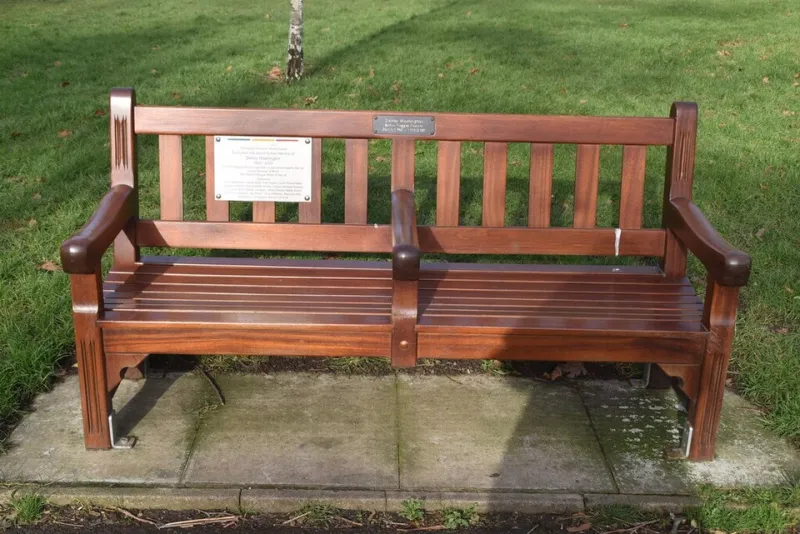
Every community eventually confronts the same question after losing someone central to its life: how do we keep this person present? The usual answers are durable ones — bronze plaques, memorial funds, a bench with a name engraved on the armrest. Our town now has the bench, and it is a lovely thing.
But spend an afternoon with the people who knew Stanley Kubi best, and you will notice something the bench cannot do. You will notice his granddaughter teaching a Cub Scout how to tighten a hinge without stripping the screw. You will notice a teenager humming the songs from the porch. You will notice a habit being handed, carefully, from one pair of hands to the next. And you may come to agree with what many in this community have quietly concluded: the truest tribute to Stanley Kubi is not made of granite. It is made of behavior.
What the Younger Generation Actually Kept
Ask Stanley's grandchildren what they inherited, and none of them mention objects. They mention methods.
His eldest granddaughter, now in college, describes what she calls "the Stanley pause" — his practice of waiting a beat before responding to bad news, so that his first words were comfort rather than panic. "I use it constantly," she says. "Group projects, roommate drama, everything. I don't know where I'd be without it."
His grandson, fifteen, has taken up the morning walk, though on a different route and a later hour. "It sounds small," he admits. "But you learn things about your neighborhood you can't learn any other way. He was right about that."
Then there is the chili. The recipe — never written down, never measured — has been reverse-engineered by three separate family members, each convinced theirs is closest to the original. The family considers this rivalry a feature, not a flaw. Stanley, they say, would have found the argument delicious.
The Scout Troop That Adopted a Legacy
Perhaps the most unexpected chapter in this story belongs to a local scout troop that never met Stanley. Their leader, a neighbor of the Kubi family for years, began incorporating what she called "Stanley's rules" into troop meetings: fix something for someone without being asked, learn one practical skill a month, and leave every place you visit a little better than you found it.
The scouts responded to these rules, she believes, precisely because they are concrete. "Kids don't connect with abstractions like 'be kind.' They connect with 'show me how to fix this hinge.' Stanley understood that. We're just borrowing his curriculum."
Last spring, the troop made its first official pilgrimage to the memorial bench, where each scout left a note. Several wrote variations of the same message: thank you for teaching us things you never got the chance to know you taught.
Why Habits Outlast Monuments
There is a reason this kind of inheritance endures where stone does not. A monument asks nothing of the person who passes it. A habit asks everything — it must be practiced, practiced again, and demonstrated for someone watching. It requires the living to do the remembering, actively, with their hands and their time.
Sociologists sometimes call this intergenerational transmission; families call it something simpler. "We don't keep him alive by talking about him," one neighbor says. "We keep him alive by doing the things he did."
This is not to diminish the bench, which has become a genuine gathering place and a source of real comfort. It is to suggest that the bench and the habits serve different purposes. The bench gives grief a location. The habits give memory a future.
An Argument for Living Memorials
If there is a case to be made here — and as a community, we believe there is — it is this: when we lose someone whose goodness was practical, the best memorial is practical too. Stanley Kubi did not comfort people in theory. He fixed their hinges. He walked their streets. He fed them chili and sang slightly out of tune.
So teach a child the pause before the response. Walk a route slowly and pay attention. Fix something for a stranger. These acts will never bear his name, and that is exactly the point. The finest legacy is the one that has dissolved so completely into the people who carry it that they no longer think of it as a legacy at all.
They simply think of it as how things are done — because Stanley Kubi showed them how.