What the Notes at Stanley's Bench Tell Us About Grief, Gratitude, and Small Kindnesses
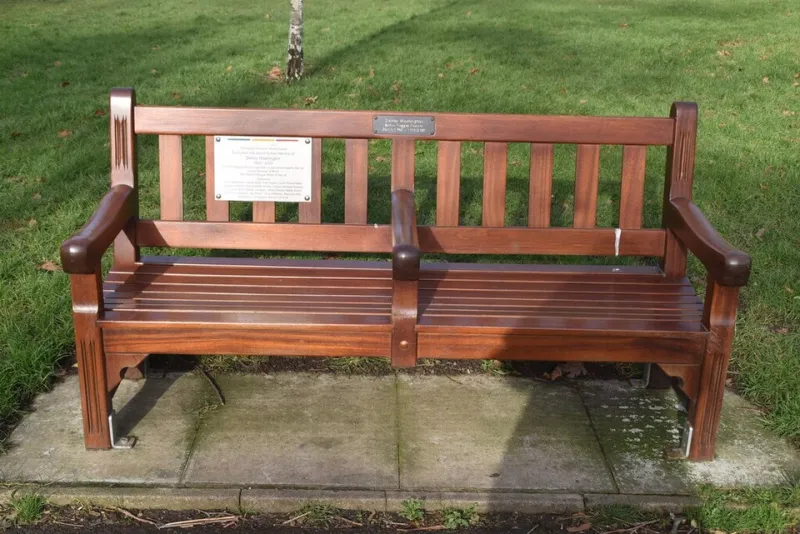
Photo: N Chadwick , CC BY-SA 2.0, via Wikimedia Commons
There is a ritual that repeats itself at the memorial bench on the east side of Riverside Park, usually in the late afternoon when the light comes through the oaks at an angle. A visitor arrives, sits for a while, and then — often glancing around as if to make sure no one is watching — tucks a folded piece of paper into the gap between the bench's armrest and seat.
By the next morning, that paper will be gone. Not lost. Archived.
The Woman Who Keeps the Letters
Margaret Ells, 68, a retired schoolteacher from two blocks over, has been collecting the notes left at Stanley Kubi's bench since the first week it was installed. She does not announce herself. She carries a wide canvas tote and a pair of cotton gloves, and she works quickly, photographing each item where it was found before gently lifting it into an acid-free folder.
"People need to believe these notes stay private," she says. "But they also need to believe someone is keeping them safe. Both things can be true."
To date, Ells has preserved more than 340 items: letters, grocery-list poems, a laminated photo of a fishing trip, a child's crayon drawing of a man holding a dog, and at least a dozen pressed maple leaves. With permission from the site's organizers, a selection of the messages — shared anonymously or with the writers' consent — is being made public for the first time.
What People Write When No One Is Supposed to Read
The notes defy easy categorization, but reading through Ells's archive, patterns emerge.
There are the thank-yous. "Stanley — you lent me your truck the week my daughter was born. Never let me pay for the gas. Still driving on that kindness." There are the confessions, small and tender. "I never told you how much those Sunday phone calls meant after Dad passed. I'm telling you now."
And there are the updates — the category Ells finds most affecting. "The tomatoes came in. Best season yet. You were right about the eggshells." These are not elegies. They are conversations, continued.
"That's the thing people misunderstand about grief," Ells says. "They think it's about looking back. Half of these notes are people reporting for duty. Living the life Stanley told them to live."
A Community Writing Itself Into Being
Dr. Priya Raman, a grief counselor based in Cleveland who studies memorial practices, reviewed a sampling of the notes and offered a practitioner's observation.
"Public memorialization is usually top-down — a plaque, a statue, a name on a building," Raman explains. "What's happening at this bench is bottom-up. The community is co-authoring the memorial, one note at a time. That act of writing, of physically leaving something, gives mourners agency at a moment when they often feel powerless."
Raman notes that the bench's location — along a walking path, near the playground, in full view of daily life — matters as much as the messages themselves. "Grief needs a place in the ordinary. This bench is not set apart. It's in the middle of everything, which is exactly where Stanley apparently liked to be."
The Notes That Travel
Not every message comes from a neighbor. Ells has catalogued postmarks from Oregon, Florida, and one weathered envelope from Nova Scotia. A note written on hotel stationery reads simply: "We never met you, Stanley. Our son did. Thank you for what you did for him in the summer of '09."
The family declined to elaborate for this article, and Ells respects that. "Some stories are given to the bench, not the newspaper," she says.
Where the Archive Goes From Here
Ells and the site's organizers are in early discussions about an annual reading — an evening each spring when a curated selection of notes would be read aloud in the park, with the writers' permission. Nothing has been finalized, and Ells is adamant that the pace be slow.
"The bench belongs to the grievers first," she says. "The archive serves them. Not the other way around."
Until then, the ritual continues. Every afternoon, new paper appears in the armrest. Every morning, the tote bag comes out. And somewhere in a spare bedroom on a quiet street in Ohio, hundreds of small testaments to one man's ordinary, extraordinary kindness sit in careful order — read, protected, and waiting for spring.
Those wishing to share a memory or a note of their own may do so through the community tributes page on this site, or, as Ells puts it with a small smile, "the old-fashioned way. The bench has room."