The Porch's Small Broadcast: Stanley Kubi and the Evening Signal a Neighborhood Still Listens For
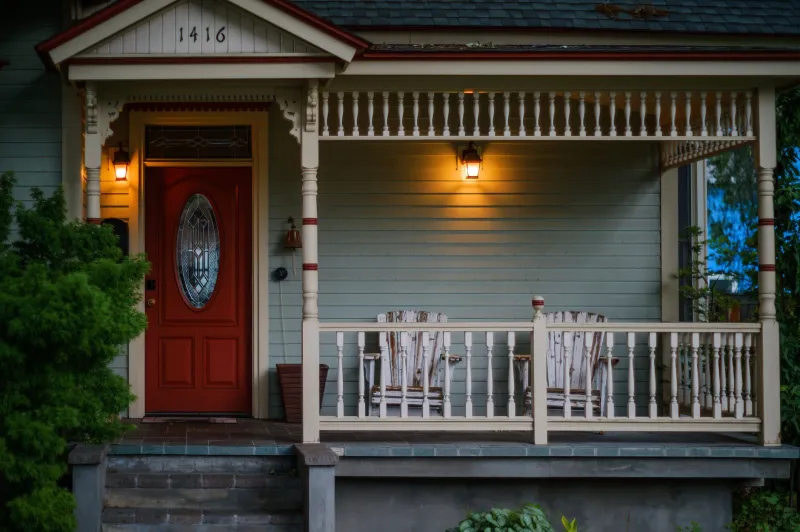
In a neighborhood of screen doors, dogs, and kitchen windows left open to the weather, Stanley Kubi's evening whistle was easy to miss. It was not a tune. It was not a shout. It was two notes, offered from the porch, brief enough to be mistaken for a bird or a passing bicycle brake. Yet for years it carried a meaning that no one had assigned it formally: Stanley was home, and the day was settling.
That is the peculiar power of small sounds. They become infrastructure without anyone voting on them. A porch light, a screen door, a particular cough in the hallway—these are not systems, until the evening they are absent. For Stanley Kubi's neighbors, the two-note whistle from his front steps became a kind of dusk bulletin. It was not addressed to any single household. It was simply released into the block, and the block learned to hear it.
A Signal Without a Name
No one seems to remember the first time Stanley whistled from the porch. That is fitting. The gesture was not designed for an audience. Family members describe it as a habit of arrival and settlement—a way of announcing that the work of the day was finished and the porch was now occupied. The first note was low and unhurried: a note to set down one's keys. The second rose slightly, as if to answer the first.
Neighbors did not call it a check-in system at the time. It would have sounded too official for something so casual. But they listened for it nonetheless. A retired teacher across the street learned to glance at her clock when the whistle came. A young father walking a stroller around the block began to time his loop so that he might pass the porch during that small ceremony. The sound did not demand a response. It offered reassurance instead.
The Check-In Nobody Assigned
In retrospect, the whistle did two things at once. It told neighbors that Stanley was safe, and it told them that he was available. The difference matters. A closed door can signal safety, but it does not necessarily invite company. The porch whistle said both: I am here, and the evening is open.
Over time, neighbors developed their own quiet responses. A wave from a driveway. A lifted hand from a kitchen window. A dog bark that may or may not have been coincidental. None of these were obligations. They were acknowledgments, the social equivalent of a nod in a hallway. The whistle had become a way for a street to keep track of itself without turning into a surveillance network.
This is the sort of care that rarely gets written into neighborhood association minutes. It is too small, too informal, too dependent on weather and habit. Yet it is often the first layer of mutual attention. When someone is ill, when someone is grieving, when someone is simply having a difficult week, the presence of a familiar sound can matter more than a formal welfare check. Stanley Kubi's whistle was not a program. It was a practice.
The Evening It Stopped
The silence was noticed before it was understood. On the first evening without the whistle, one neighbor assumed Stanley had gone to bed early. On the second, another thought he might be visiting family. By the third, the block had begun to hold a collective question. People who had never discussed the whistle with one another found themselves mentioning it in passing: Have you heard Stanley this evening?
That question carried more weight than anyone expected. It revealed how much of neighborhood life had been organized around a sound no one had thought to name. The whistle had been a small, daily proof of presence. When it stopped, the absence was not dramatic. It was atmospheric. The porch was still there. The chair was still there. But the broadcast had gone quiet.
In the years since, neighbors have spoken about that period with care. They do not describe themselves as heroes or official caretakers. They describe a street learning that it had been listening all along. Some checked in on Stanley's family. Some left notes. Some simply stood at the edge of the lawn and looked at the empty porch, unsure what to do with a habit that had become a form of affection.
Answering Back in 2026
This year, as dusk arrives earlier and the porches take on their autumn cast, a new practice has begun to form. It is not an imitation of Stanley Kubi's whistle, exactly. It is an answer to it. Neighbors step outside at the hour when the old signal used to arrive, and they offer their own two notes into the cooling air. Some whistle from front steps. Some use a small bell or a low call. The point is not accuracy. The point is reply.
The gesture is part remembrance and part mutual care. It says that the street still knows how to listen, and that the habit of checking on one another has not gone quiet. In 2026, the answering whistle is not a solemn ritual. It is a gentle one, often followed by conversation on the sidewalk or a wave across the fence. Children have begun to ask what the sound means. The answer is simple enough for them to carry forward: it means someone is home, and we are glad.
A Small Sound With a Long Reach
Stanley Kubi's whistle was never intended to become a symbol. That is precisely why it works as one. It belonged to the ordinary machinery of a life: the porch, the evening, the small decision to let the neighborhood know that all was well. Memorials often reach for monuments. This one reaches for a sound.
For those who knew him, the two notes remain a reminder that reassurance can be quiet. For those who did not, the practice at dusk offers a way to join a longer conversation about what neighbors owe one another. Not surveillance. Not obligation. Just attention, offered and returned.
The porch is still a porch. The evening still comes. And at dusk, in a neighborhood that learned to listen, the small broadcast continues—not as an echo, but as an answer.