The Shovels That Changed Hands: How One Neighborhood Kept Its Paths Open After Stanley Kubi
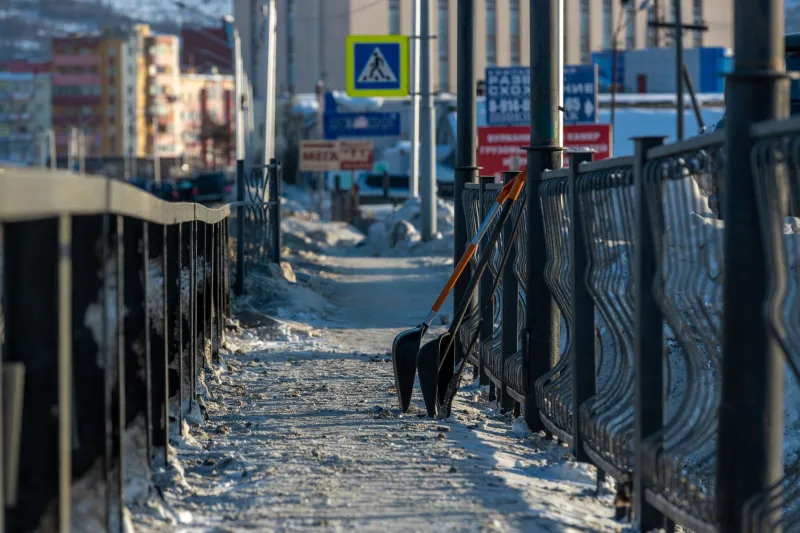
The forecast arrived on a Tuesday, the kind of winter advisory that sends people to the hardware store for salt and to the closet for the shovel they meant to replace last spring. By Thursday morning, the first measurable snow of the season had settled over the neighborhood—quiet, wet, and heavy enough to bend the branches of the young trees along the avenue.
In past years, Stanley Kubi would have been out before most porch lights came on. He was not a man who announced his work. He simply appeared with a shovel, cleared a path, scattered a little salt, and moved on. Neighbors sometimes saw him; often they did not. They saw only the result: a clean rectangle of concrete where a drift had been, a curb cut made passable, a walk leading to a door that someone else would soon use.
This year, the first storm arrived without him. And for a few hours, the neighborhood felt the difference.
The Forecast and the Absence
Snow has a way of making absence visible. A driveway that stays unshoveled, a sidewalk still holding six inches at noon, a mailbox half-buried—these are ordinary signs of a busy morning. But along the streets where Stanley Kubi lived and worked, they carried a different weight. The first flakes had barely stopped before someone noticed that the path from the corner to the bus stop was still untouched.
“I stood at the window and thought, Stanley would already be out there,” said one longtime resident, who asked that her name be withheld out of respect for the family’s privacy. “Then I realized that was the whole point. He wasn’t going to be out there. Somebody else had to be.”
That realization moved faster than any formal committee could have. A text message went out to a handful of neighbors. Then another. By midmorning, a small group had gathered at the corner with shovels, a snowblower, and a plastic sled loaded with bags of ice melt. No one had appointed a leader. No one had printed a schedule. They simply started where Stanley would have started: with the walks that other people depended on.
A Map Drawn in Snow
The work divided itself naturally. One neighbor took the long stretch along the avenue, where the snowplow had left a heavy ridge at the curb. Another cleared the path to the community mailbox. A retired couple with a small snowblower handled the driveway of an older woman who uses a walker. Two teenagers, pressed into service by a parent, were assigned the bus stop and the fire hydrant.
It was not a perfect system. The snowblower stalled twice. Someone forgot the salt. The teenagers complained, then kept going. But by early afternoon, the neighborhood had something that had not existed that morning: a continuous, walkable route from the residential blocks to the corner where the school bus stops.
“It sounds small when you say it out loud,” one neighbor said. “But if you’re the person trying to get to the bus with a second-grader, or the mail carrier trying to reach a porch, it’s not small at all.”
That is the lesson Stanley Kubi seemed to understand without needing to explain it. A cleared sidewalk is not merely a courtesy. It is a piece of public infrastructure that someone has chosen to maintain. It is a sentence in the present tense: you can go this way. You are expected somewhere. The path is open.
The Ethics of a Cleared Path
Grief and snowstorms are not natural companions. One is interior and slow; the other is public, cold, and immediate. Yet the first snowfall after a loss often forces a community to confront the practical shape of absence. The person who used to do a thing is no longer there to do it. The thing still needs doing.
For Stanley Kubi’s neighbors, the response was not to declare a monument or plan a ceremony. It was to pick up the shovels. In doing so, they discovered something about the scale of his quiet work. Shoveling is repetitive and unglamorous. It must be done early, before the snow compacts. It must be done again when the plow comes through. It must be done carefully around mailboxes, hydrants, and the edges of lawns where children cut corners on their way to school.
“I didn’t know how much he did until I tried to do a fraction of it,” one resident said. “And I only did my block.”
That admission has become a kind of refrain. Neighbors describe learning the rhythm of the work: the right angle of the shovel, the value of a little salt, the difference between clearing a path and merely moving snow aside. They also describe the social rhythm. People who had waved from cars now stood in the cold and talked. A teenager learned that an older neighbor needed the walk cleared to the mailbox, not just to the front door. Someone left a thermos of coffee on a porch with a note that said, simply, “For whoever gets here next.”
What the Shovels Taught
The first winter without Stanley Kubi is not yet over, and no one pretends that a few cleared sidewalks amount to a full answer to loss. But the neighbors have begun to speak of the work as something they want to keep doing—not as a one-time tribute, but as a continuing practice. A rotation is forming. A small fund for ice melt has been suggested. The teenagers have been promised hot chocolate, which is both a bribe and a thanks.
What has emerged is not a memorial of stone or bronze. It is a maintenance plan. It is the recognition that remembrance can be a physical act performed in cold weather, before the rest of the neighborhood wakes up. It is the decision to keep a path open for someone else, even when the person who taught you to do it is no longer there to see it.
On the morning of the first storm, the shovels changed hands. The sidewalks were cleared. The bus stop was reachable. The mail carrier made her rounds. And somewhere along the route that Stanley Kubi once walked without ceremony, a neighborhood learned that the quietest habits are often the ones that hold a place together.
The snow will fall again. The work will need doing. This time, no one is waiting to see who will start.