A Volume of Neighbors: The Book Exchange That Keeps Stanley Kubi’s Memory in Motion
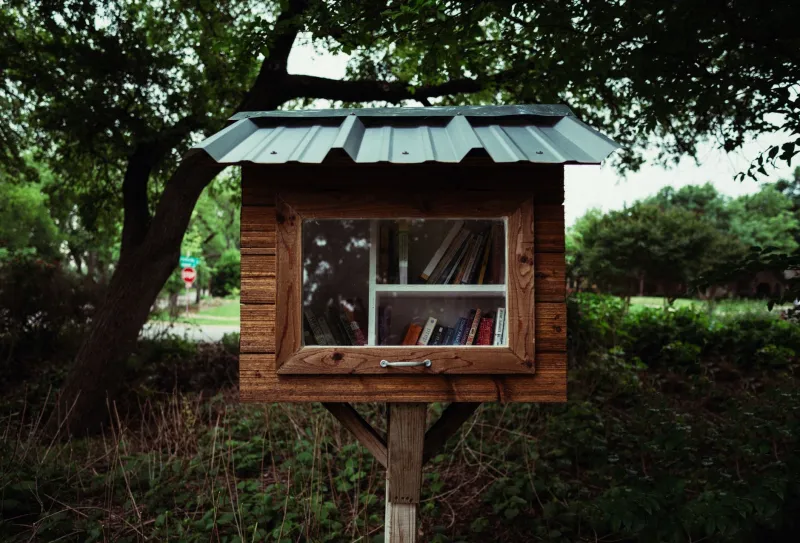
On a residential street, where the sidewalks are uneven and the shade trees have had decades to grow into their task, a small wooden box stands on a post. It has a glass door, a modest roof, and a hand-lettered sign bearing Stanley Kubi’s name. To a passing driver, it might look like an ordinary Little Free Library — one of the thousands of neighborhood book exchanges that dot American towns and cities. To the people who use it, it is something closer to a living memorial: a place where Stanley’s story is not sealed behind glass but passed from hand to hand.
A Modest Structure With a Long Memory
The library is not grand. It holds perhaps two dozen books at a time, depending on their size and the generosity of the week. There are novels with cracked spines, cookbooks with handwritten notes in the margins, children’s stories that have been read aloud so often the pages have softened. A small guestbook sits on the lower shelf, protected from the weather by a plastic sleeve. Beside it, a stack of blank index cards and a pencil invite visitors to jot down a memory, a recommendation, or a simple word of thanks.
The structure itself was built by neighbors who wanted a tribute that could be used rather than merely viewed. A bench can hold a visitor for an afternoon; a book box can send a story home for a week. That distinction matters. Stanley Kubi, as friends and family remember him, was not a man who sought a monument. He was a man whose legacy lived in ordinary exchanges — a loaned tool, a shared meal, a conversation on the porch. A book exchange fits that pattern. It asks for participation, not reverence alone.
How the Library Began
The idea grew from a conversation among neighbors who had come to know Stanley through the small rituals of the block. They recalled the way he treated books as communal property, not precious objects. He lent them freely. He recommended them without ceremony. He believed that a book kept on a shelf was only half alive.
When the neighborhood began discussing a memorial, several suggestions were raised. A plaque was considered. A tree was proposed. Both had merit, but neither seemed to capture the way Stanley moved through the community. The book box, by contrast, offered a daily invitation. It could be visited on a morning walk. It could be stocked after a house cleaning. It could receive a child’s first chapter book and a retiree’s favorite mystery in the same week.
The family approved the plan, and the library was dedicated in Stanley’s name. The initial collection came from his own shelves and from neighbors who wanted to contribute. A small plaque was affixed to the door, noting that the library was placed in memory of Stanley Kubi and asking visitors to take a book, leave a book, and — if they wished — leave a memory.
The Rituals That Keep It Alive
A book exchange can fall into neglect if no one tends it. This one is sustained by a loose rotation of stewards: neighbors who check the box after storms, wipe the shelves, and remove books that have been damaged by moisture. They do not run it like a formal institution. There is no checkout card, no due date, no fine. But there is a rhythm.
One steward restocks the library on Sunday evenings. Another checks it on Wednesday mornings, before the school bus arrives. A retired teacher keeps a small supply of children’s books on hand for the summer months, when young readers visit more often. A local gardener tucks in seed catalogs and gardening guides each spring. The result is a collection that changes with the seasons and with the people who use it.
The guestbook has become its own archive. Some entries are brief: “Thank you, Stanley.” Others are longer, describing a conversation, a borrowed ladder, a meal delivered during a difficult week. The notes are not polished tributes. They are the kind of handwriting that appears when someone is standing at a book box with a pencil in hand, trying to say something true before the dog gets restless or the groceries get warm.
Why a Book Exchange Outlasts a Plaque
A plaque records a name. A book exchange puts that name into circulation. Every time a visitor opens the door, reads the small sign, and chooses a title, the memorial is renewed. Every time a neighbor adds a book with a note inside — “This one made me think of Stanley” — the tribute becomes collaborative.
That collaboration is the library’s quiet strength. It does not require visitors to know Stanley personally. A newcomer can borrow a novel without knowing the full story behind the box. But the sign, the guestbook, and the notes create a gentle invitation to learn. The memorial is not imposed. It is discovered.
There is also a practical advantage. Static memorials can become invisible over time. People walk past them without seeing them. A book exchange changes. It has new titles, new notes, new visitors. It gives the neighborhood a reason to approach, and approach is the first step toward remembrance.
Starting a Tribute Library of Your Own
Families and communities interested in creating a similar tribute can follow a straightforward path. The first step is to choose a steward — or a small group of stewards — who will check the library regularly, protect it from weather, and keep the collection fresh. The second is to select a durable, weatherproof structure. If the library will carry the Little Free Library name, stewards should review the organization’s current registration and signage guidelines; otherwise, a simple custom-built box with a clear dedication plaque can serve the same purpose.
Next, decide what kind of collection the library will hold. A general collection of novels, nonfiction, and children’s books is easiest to maintain. A themed collection — gardening, cooking, local history — can give the library a distinctive character. It is wise to include a small guestbook and a supply of pencils, along with a note explaining the tribute and inviting visitors to participate.
Accessibility matters. The box should be reachable from the sidewalk, with a door that opens easily and shelves that are not too deep for smaller hands or older visitors. A bench nearby can encourage people to linger. A simple rule — take a book, leave a book, leave a memory if you wish — is usually sufficient.
Finally, resist the urge to over-curate. The most enduring tribute libraries are not museums. They are exchanges. They allow for wear, for spontaneity, and for the occasional odd donation. A paperback thriller may sit beside a poetry collection; a child’s picture book may rest against a memoir. That mixture is not disorder. It is community.
A Small Circulation, a Lasting Return
The library in Stanley Kubi’s name will never hold a complete collection. It will never be finished. That is the point. It remains open to the next book, the next note, the next neighbor who pauses on a walk and opens the door. In that small act, a name is not merely remembered. It is kept in motion.