Rows We Share Now: Inside the Garden Stanley Kubi Left to Everyone
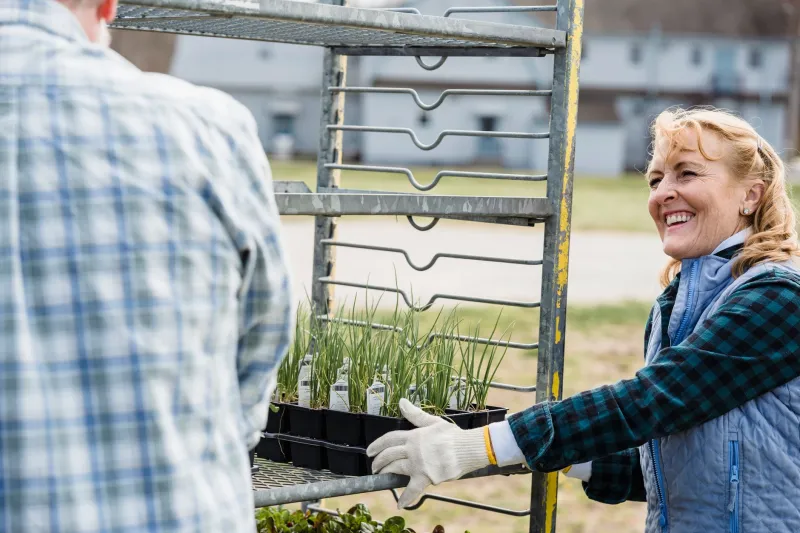
On the eastern edge of town, past the last stretch of chain-link fence behind the community center, a quarter-acre of vegetables keeps growing. Tomatoes in August. Squash in the heavy heat of July. Late kale that holds on into the first frosts. Nothing about the plot announces itself as a memorial. There is no plaque, no dedication stone, no formal name on the gate. But everyone who works the soil here understands that the garden belongs, in a way, to Stanley Kubi — because he was the one who made it everyone's.
A Plot With an Open Gate
Stanley took over the neglected parcel nearly two decades ago, when the community center still considered it a liability rather than an asset. Neighbors who knew him then describe a man who treated the fence line the way other people treat a front porch. Anyone walking by could expect a wave, a question about their week, and — inevitably — a job. Pull this weed. Hold this twine. Taste this, and tell me if it needs another week.
"He never asked for help the way most people do," says Dolores Winters, who has tended a corner of the plot since 2011. "He'd just hand you something. A trowel, a bag of beans, whatever needed doing. Before you knew it, you had a row. That's how he got you."
The rows multiplied. A retired teacher took over the peppers. A family of five from the apartment complex across the street claimed the beans. Teenagers doing court-ordered service hours learned, sometimes reluctantly, that weeding goes faster when you talk to the person on the next knee pad over.
Dividing What He Never Owned
When Stanley passed away last spring, the question of the garden's future surfaced almost immediately. The land belongs to the parks district. The tools lived in his garage. The knowledge lived only in him.
What happened next says more about the man than any eulogy could. The regulars met on a Saturday morning — the day Stanley had always worked the plot — and drew lines in the dirt. Not with string or stakes, but with conversation. Each household took a section. The common paths, the compost pile, and the water barrels became shared responsibility, maintained on the same rotating schedule Stanley had kept alone for years.
"Nobody voted on anything formal," recalls Marcus Oyelaran, who tends the tomato rows with his two sons. "We just started doing what he did. Show up Saturday. Check on the person next to you. Take what you need, leave the rest for somebody who comes by later." His sons, he adds, now run the watering rotation. "They never met Stanley. They met his garden."
Harvest as Memorial
There is a particular kind of grief that comes with growing things. The season does not pause for mourning. Beans ripen on schedule whether or not the person who planted them is there to pick them. The gardeners here have come to see that relentlessness as a kind of comfort.
In the first summer after his death, the plot produced more than anyone remembers. Without Stanley's habit of giving everything away by the basketful, the surplus piled up — until the gardeners did what he would have done. Zucchini went to the food pantry on Fifth Street. Tomatoes appeared on the porches of neighbors who had never set foot in the garden. A crate of peppers found its way to the elementary school, where staff remembered Stanley stopping by with produce for the front office every October.
The rhythm has become tradition. Whatever the rows give beyond what the plot-holders need is distributed, no ledger, no thanks required. "It's the closest thing to a funeral rite we have," Dolores says. "He fed people. We feed people. That's the whole ceremony."
What the Garden Teaches
Spend a Saturday morning at the plot and you notice something the gardening manuals don't cover. The work is slow enough for conversation and repetitive enough for honesty. People talk about their weeks, their kids, their dead. Newcomers are folded in the way Stanley folded everyone in — with a task and a tomato.
The parks district, initially wary of an informal arrangement, has since formalized the plot as a community garden, with the gardeners' blessing. They kept the name off the sign, at the group's request. "It's not about a name on a board," Marcus explains. "Stanley didn't plant alone, and he didn't want credit for it either. The best tribute is that nobody here really owns it."
In late September, when the light goes long and gold, the gardeners still gather for the ritual Stanley kept: a folding table, whatever is ripe, and enough chairs for whoever shows up. Someone always brings a lemonade. Someone always tells the story about the year the deer got the corn. And when the table is cleared and the tools are rinsed and hung on their nails, the gate is left open — just as it always was.
The rows keep feeding the neighborhood. It is, those who knew him agree, exactly the harvest he intended.