Measured in Hundredths: The Weather Log Stanley Kubi Kept for a Street That Never Asked
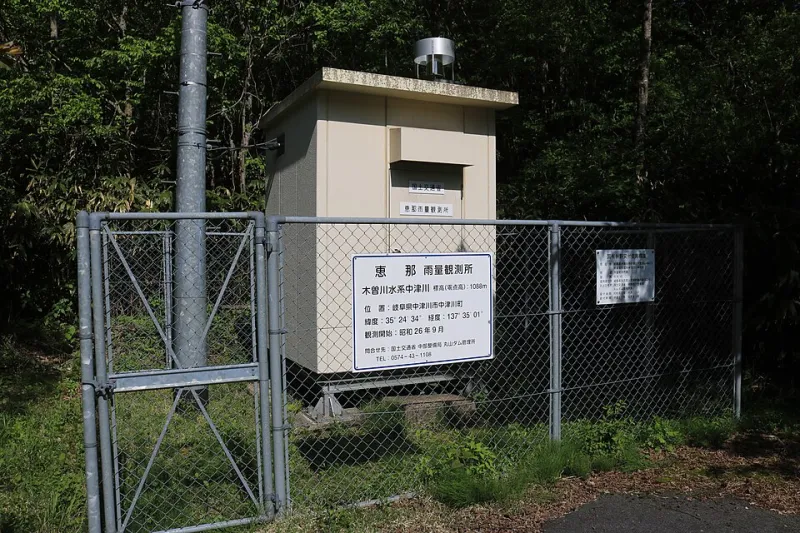
Photo: Alpsdake, CC BY-SA 4.0, via Wikimedia Commons
The gauge was not much to look at. A clear plastic cylinder with a graduated scale, mounted at eye level on the back fence, the kind of object most people install in spring and forget by July. Stanley Kubi read it every morning anyway, usually before the coffee had finished brewing, and wrote the result in a pocket notebook with a pencil stub he kept sharpened to a point.
The entries were unglamorous. A date. A time. A number in hundredths of an inch. In winter, a note about snow depth and the water it yielded when melted. No commentary, no forecasts, no editorializing about whether the weather was good or bad. Stanley reported. The neighborhood read.
A Reading Taken Before the Kettle Whistled
The routine was so ordinary that it nearly escaped notice, which is perhaps why it lasted. Stanley would step onto the back porch, cross the lawn in his slippers, lift the inner tube from the gauge, and hold it up to the light. Then he would return to the kitchen table, write the figure down, and go about his day.
What made the habit visible was not the writing but the sharing. A small chalkboard or a slip of paper near the fence, or a word passed over the hedge, carried the total to whoever happened to be outside. Neighbors learned to ask. Stanley learned to answer without making a production of it. The exchange took less than a minute and happened hundreds of times a year.
The Arithmetic of Attentiveness
A rain gauge is a modest instrument. It does not predict, warn, or explain. It merely catches what falls and holds it up for inspection. Yet over months and years, those daily figures accumulate into something larger: a local record of drought and deluge, of the summer the lawn went brown and the October the gutters could not keep up.
Stanley's log was not science in the institutional sense. He was not calibrating instruments or submitting reports to a agency. But the same instinct that drives volunteers in the Community Collaborative Rain, Hail and Snow Network, the nationwide effort in which ordinary residents measure precipitation for their own corners of the country, was present in his backyard. Weather is regional, but it is experienced locally. A reading taken three blocks away is more useful to a gardener than a figure from an airport twenty miles off.
Why a Neighbor's Numbers Carried Weight
The readings mattered because they were specific. When a neighbor wondered whether the tomato beds had received enough water, Stanley could say what had fallen on their street, not on the county. When a roof leaked after a storm, the total in the notebook offered a small, plain explanation. When children asked whether the ballfield would be playable, the answer came from the fence, not from a phone.
There was authority in the consistency. Stanley did not publish his numbers, advertise them, or claim expertise. He simply showed up at the gauge every morning, and the steadiness of that attention made the record trustworthy. In a culture that rewards grand gestures, his was a quiet form of civic accounting: one household keeping track so that others did not have to.
Data, Devotion, and the Difference
It would be easy to describe the rain gauge as a hobby, and perhaps it was. But hobbies usually serve the person who keeps them. This one served a street. The log turned private observation into shared language. It gave neighbors a way to begin a conversation, a reason to check on one another after a storm, and a small, recurring reminder that someone nearby was paying attention to the same sky they were.
That is the difference between data and devotion. Data sits in a file. Devotion shows up at the fence with a pencil. Stanley's figures were never requested by any office, never audited, never archived in a official repository. They were offered freely, morning after morning, and received in the same spirit.
The Fencepost as a Civic Instrument
As autumn settles over the neighborhood this November, the gauge may or may not still be hanging. What remains is the example. A single household can keep a record that helps many others. A small habit, repeated without fanfare, can become a form of infrastructure. The weather will continue to arrive whether or not anyone writes it down, but the writing is what turns rainfall into relationship.
Those who wish to honor Stanley Kubi's way of living need not install a weather station. They might simply keep one small record, faithfully, and share it with a neighbor. The gesture is modest. So was the gauge. So, too, was the man who read it every morning before the kettle whistled.
The notebook has closed, but the lesson has not. Attentiveness is a form of generosity, and even a fencepost can hold a public trust.