Ink in the Margins: When Stanley Kubi's Handwriting Became Public Record
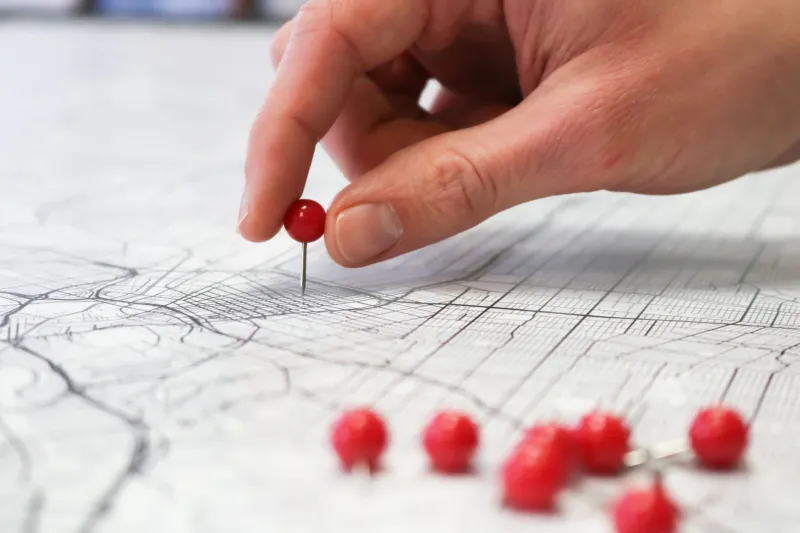
The boxes arrived at the county surveyor's office on a Tuesday, part of a routine digitization project meant to move decades of paper records into modern mapping software. Nobody expected to find a story inside them.
But there it was, in careful block letters and a distinctive slanted hand: annotations scrawled along the edges of survey maps dating back to the early 1980s. Notes about a drainage ditch that flooded every spring behind the Harlan property. A warning that the bend near Miller Road iced over before anywhere else in the township. A small, almost apologetic aside — "Mr. Whittaker's mailbox, needs replacing again, kids keep clipping it" — dated 1994.
The handwriting belonged to Stanley Kubi.
An Unofficial Surveyor
Stanley Kubi never held a title with the county. He was not a licensed surveyor, an engineer, or a public works employee. By trade, he repaired small engines out of a garage on the east side of town. By habit, however, he was something harder to classify: a man who walked nearly every road in the township and believed someone ought to keep track of what he found.
Apparently, he decided that someone was him.
How his notes ended up on official county maps remains a matter of some gentle debate. The most reliable account comes from a retired planning clerk who remembers Stanley stopping by the office once or twice a year, rolled map under his arm, pointing out what had changed since his last visit. Rather than turn him away, clerks of that era simply penciled his observations into the margins — a shortcut here, a washed-out culvert there — because the information was, quite simply, better than what they had.
Over the years, those marginal notes multiplied. And over the years, they were quietly acted upon: a drainage easement rerouted, a guardrail extended, a stop sign repositioned after Stanley flagged what he called "the sight-line problem" at a rural intersection.
What the Records Show
When current staff cross-referenced the annotations against project files, the pattern became undeniable. At least eleven infrastructure decisions between 1985 and 2010 could be traced, directly or indirectly, to a note in Kubi's handwriting. A culvert upsized in 2003 after his notation about "third flood on this creek in five years." A stretch of shoulder regraveled along a route he described as "where the school kids cut through, they won't use the long way."
None of the official documents credited him. The maps simply absorbed his knowledge the way a sponge absorbs water — silently, completely, without leaving a trace of where it came from.
What It Means to Be Remembered by Accident
There is something fitting, those who knew him say, about Stanley surviving in the fine print. He was never a man for plaques or ceremonies. When the neighborhood association once proposed honoring him at a picnic, he reportedly asked whether they might instead fix the bench by the bus stop, which they did.
Yet the discovery raises a question worth sitting with: how much of any community literally runs on the unnoticed labor of people whose names never make the record? The county maps now carry a formal attribution stamp acknowledging Kubi's contributions — a small correction, decades late. His family has donated several of his personal field notebooks to the county historical society, where they sit alongside the very maps he annotated.
One archivist put it plainly: "We digitize a lot of paper. Very little of it feels like a person. This does."
Reading the Handwriting
Spend time with those margins and a portrait emerges that no biography could fully capture. The notes are practical, precise, and — occasionally — funny. Beside one parcel line: "Dog is friendly. Dog is also fast." Near the old grange hall: *"Roof holds snow past March, ask them to rake it. They won't. I will."
And he did. That may be the truest summary of the man the maps accidentally preserved: when Stanley Kubi saw something that needed doing, he did not wait for the record to reflect it. He simply added the note, made the walk, fixed the thing — and trusted that the community, like a good map, would hold the shape of his care long after he was gone.
It did.