Hands That Taught: The Repairs Stanley Kubi Shared With a Whole Neighborhood

Photo: Unknown, CC BY 4.0, via Wikimedia Commons
There is a particular kind of generosity that never makes the newspaper: the man who shows up on a Saturday morning with a toolbox, fixes a sagging gate, and then — this is the important part — makes the homeowner hold the drill while he explains what he is doing and why.
Stanley Kubi was that man. And according to the people who knew him best, he was less interested in being useful than in making others useful.
"He Wouldn't Do It for You. He'd Do It With You"
Ask around the neighborhood and the same phrase keeps surfacing, in slightly different forms. Stanley didn't fix things for people. He fixed things with them.
Dolores Winters, who lived three doors down from the Kubi house for over two decades, remembers when her kitchen faucet started dripping one October. "I called a plumber, and Stanley caught wind of it," she says. "He told me to cancel the appointment. Then he showed up with a basin wrench and made me lie under the sink while he talked me through it. I was furious. Then I was proud. I've replaced every washer in this house since."
That was the pattern, again and again. Screens patched rather than replaced. Bicycle chains re-tensioned on the driveway while the neighborhood kids formed a semicircle. A garage door spring — a genuinely dangerous job — narrated step by step while two teenagers held the ladder and learned what a winding bar was for.
A Short List of Lessons, Long Remembered
The skills Stanley taught were never exotic. That was the point. He believed a person should be able to:
- Patch a window screen so the repair doesn't show
- Silence a squeaky hinge without replacing it
- True a bicycle wheel by ear and feel
- Reset a tripped breaker and actually understand why it tripped
- Shim a wobbly table leg with a folded matchbook, "the old way"
His nephew, Marcus, inherited Stanley's toolbox and found a note card tucked inside the lid. It read, in Stanley's handwriting: If they can do it themselves next time, you did the job right.
The Repair He Never Got To
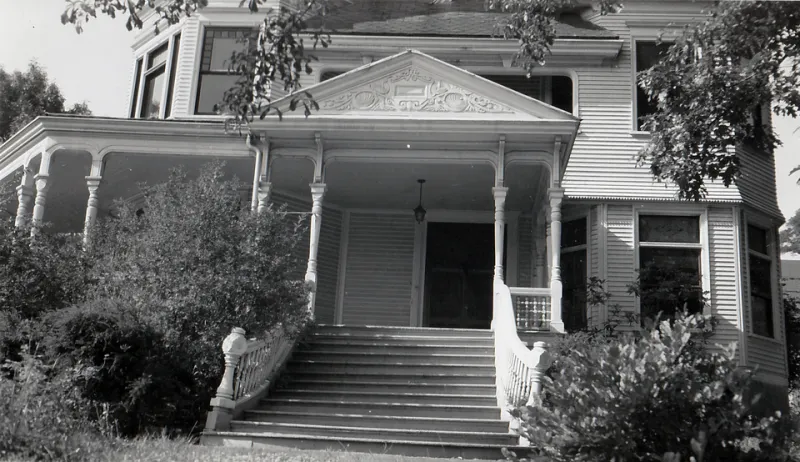
Here is the detail that stops people when they hear it: Stanley, the man who taught half the street to caulk a window, put off fixing his own back steps for years. Neighbors offered. He waved them off. "I'll get to it," he'd say, usually while climbing the steps to help someone else with a project.
His family finds quiet meaning in that now. Stanley spent his hands and hours on other people's houses, and the community, in turn, has spent its time on his memory. The steps were repaired after his passing — by neighbors, using his tools, teaching each other.
Fix-It Day: A Tradition That Outgrew a Driveway
Two springs ago, a group of Stanley's former "apprentices" organized a small gathering: folding tables in the church parking lot, a few donated tool kits, and an open invitation for anyone to bring something broken. They expected a dozen people. More than seventy showed up.
The event is now an annual fixture — a community fix-it day held each April, stocked with needle-nose pliers, spare washers, bike stands, and coffee. First-timers are paired with experienced hands, and the pairing rule is non-negotiable: nobody fixes anything alone. Stanley's rule, enforced in his absence.
Volunteers have added a small tradition of their own. At the end of the day, they place a well-worn adjustable wrench on the front table. It belonged to Stanley. Nobody repairs with it; it simply sits there, a reminder of whose hands started all of this.
What Gets Passed Down
Grief, people say, does strange things to a neighborhood. But so does competence. Every patched screen and tuned bicycle in these few blocks is a small monument — not to a man who fixed things, but to a man who made sure he wouldn't always be needed.
He got his wish. Look around any fix-it day, and you'll see his lessons being taught a second and third time, hand to hand, exactly as intended.